

Updated April 15, 2026
Should I Lease or Buy a Printer for My Business? Which is Better?
Table of Contents
Choosing the right printer for your business might seem straightforward, but it quickly gets tricky when you weigh the options between leasing and buying.
Both approaches have upsides and downsides, including considerations like rental agreements and depreciation of assets, that affect your access to essential resources such as your budget, workflow, and long-term plans in ways you might not expect at first glance.
After digging into the details of each choice, I’ve put together this guide to help you figure out which path makes the most sense for your company’s unique needs.
Deciding whether to lease or buy a printer depends on your business’s budget, print volume, and long-term goals. Buying offers ownership, potential tax advantages under Section 179, and lower costs for high-volume printing but requires upfront investment and maintenance responsibility; leasing provides predictable monthly expenses, included maintenance, and easier upgrades but can be more costly over time without asset ownership, and one must consider the depreciation of the purchased printer over time.
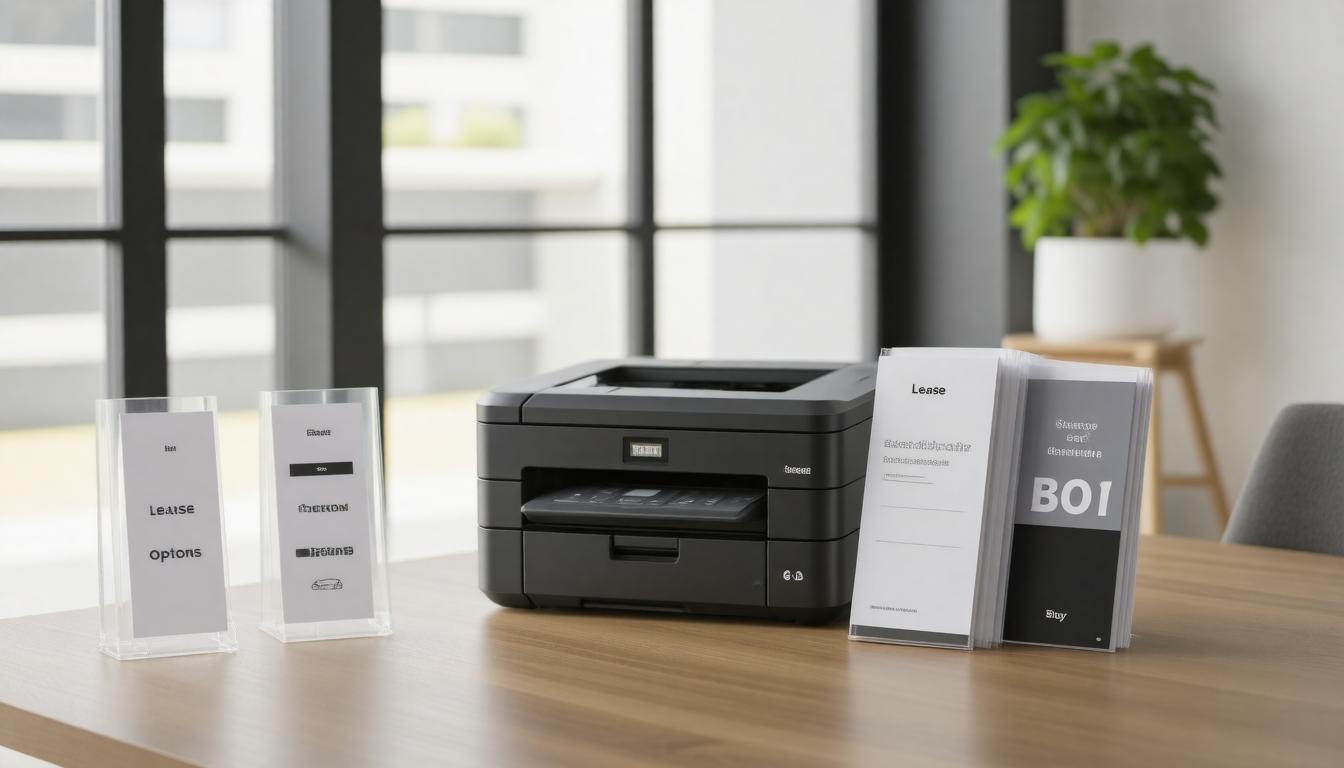
Advantages of Leasing a Printer
One of the most immediate benefits of leasing, similar to a rental arrangement, is how it removes the burden of a hefty upfront cost. Instead of paying thousands at once for a high-capacity or multifunction printer, businesses spread their expenses over manageable monthly payments.
This preserves working capital—a crucial advantage if your cash flow fluctuates or you’d rather invest funds elsewhere, like marketing or product development.
Beyond just saving cash upfront, leasing brings the comfort of predictable expenses. When fixed monthly payments cover the costs, budgeting becomes straightforward and less stressful.
This financial clarity helps organizations plan accurately without last-minute surprises from unexpected equipment expenses that often arise when owning and managing printers outright, not to mention dealing with the depreciation factor of owned equipment.
Another major perk tied directly to leasing contracts is that maintenance and repairs frequently come included.
If a printer jams, malfunctions, or needs parts replaced, the leasing provider usually steps in quickly—even onsite in some cases—without additional service bills.
For small IT teams or businesses without dedicated printer techs, this reduces downtime and saves valuable staff hours.
Many leasing agreements also handle consumable supplies, such as toner cartridges and waste bins, ensuring these are replenished before running out. Your team doesn’t need to track inventory or make last-minute supply runs.
This convenience keeps operations running smoothly and prevents productivity losses caused by unexpected ink shortages.
Technology upgrades represent another compelling reason to lease. Printer models evolve rapidly with better speed, connectivity, security features, and energy efficiency.
According to a 2025 Gartner survey, 64% of businesses emphasized their ability to upgrade leased printers regularly as a top advantage.
With leases typically spanning 12 to 36 months, companies stay equipped with the latest hardware without hefty reinvestments every few years or worrying about the depreciation of outdated technology.
Leasing offers flexibility beyond technology refreshes. If printing requirements grow—as when expanding office staff—or contract during lean periods, lease terms may accommodate swaps to larger or smaller units. This adaptability can optimize costs while aligning closely with actual business demands.
Moreover, leasing provides easy access to the latest technology, ensuring that businesses can swiftly adapt to changing needs without the burden of outdated equipment.
Understanding these benefits sets the stage for examining potential downsides that might affect your choice in printer acquisition strategy, including considerations about office equipment management.
One of the most significant downsides we’ve seen with leasing printers, akin to some rental disadvantages, is the higher long-term cost. What often looks affordable on a month-to-month basis can quickly add up.
From a finance perspective, the pros of outright purchasing rather than leasing become apparent.
For example, data from Printer World shows that over five years, businesses might end up paying up to 30% more than if they had simply purchased the printer outright.
This is because monthly lease payments, service fees, and sometimes usage surcharges accumulate continuously without ever resulting in ownership of the office equipment, thereby affecting your business’s financial health.
Drawbacks of Leasing a Printer
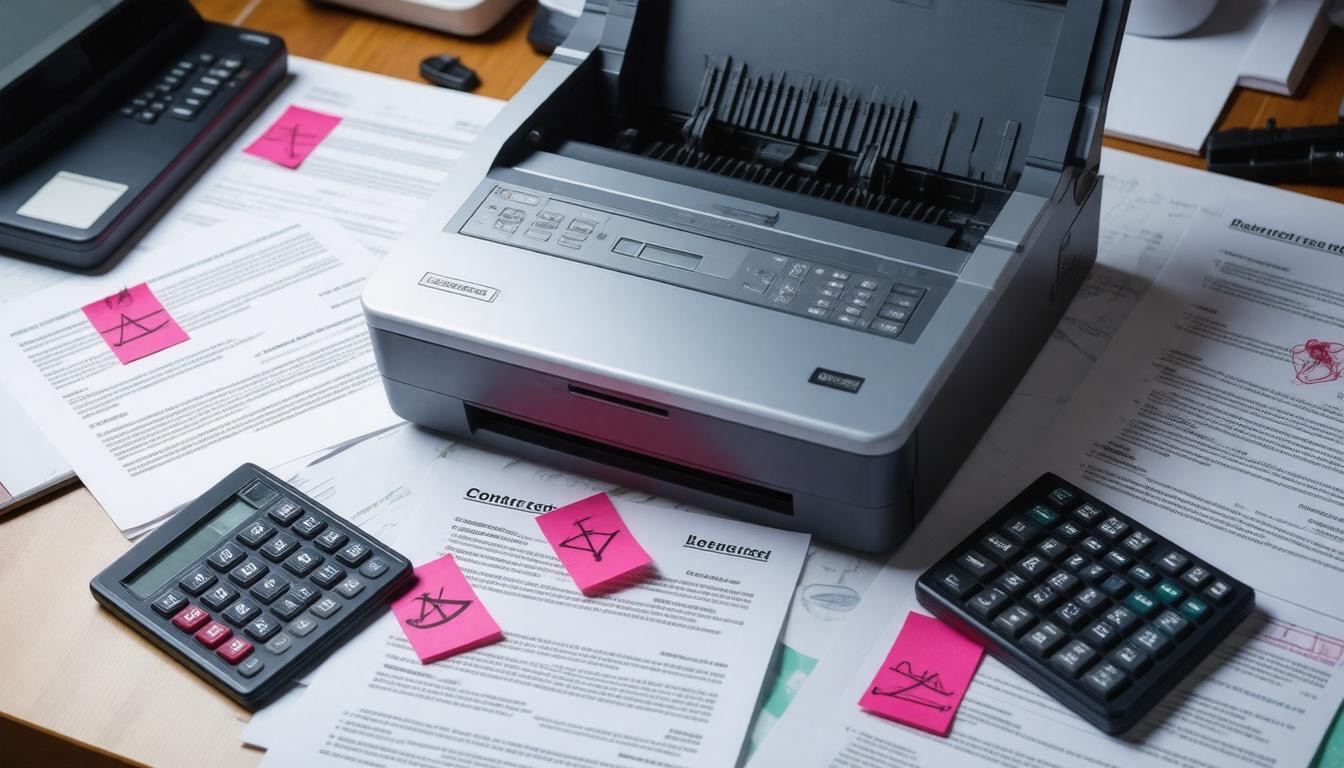
It’s easy to fall into the “small payments” trap — where low monthly fees mask the reality of greater lifetime expenses. While budgeting may feel simpler with fixed monthly outlays, the total paid doesn’t build equity for the business in terms of office equipment.
Instead, it’s akin to renting a car: convenient, but without asset accumulation after years of use.
Examining the finance aspect reveals that while leasing offers temporary advantages, such as lower initial costs, the long-term pros of ownership, like asset accumulation of office equipment, outweigh these temporary perks.
Beyond the financial implications, another critical factor is that leasing contracts come with restrictive terms that impose limits on printer usage and flexibility.
When we lease, we don’t actually own the device. That means at the end of the lease term, the printer isn’t ours to keep or resell. Without ownership, there’s no way to turn that office equipment into a future asset.
Many companies overlook this and find themselves continually investing in leases, which adds up over time and masks the real cost behind what seems like a hassle-free option.
For businesses aiming to build their asset base while controlling print costs, ownership provides tangible value. After you’ve paid off the initial investment, your printing expenses decrease since you’re only managing consumables and maintenance — not ongoing lease fees.
The finance advantages become more evident over time as the pros of owning an asset contribute to healthier financial statements and greater operational flexibility in managing office equipment.
The lack of ownership also ties into some practical challenges around contract restrictions that affect operational freedom.
Lease agreements frequently include volume caps, penalties for exceeding allowed print quantities, restrictions on consumables, and hefty fees if you want to terminate early.
These stipulations protect the leasing company but can be frustrating when business needs change unexpectedly—like a sudden increase in printing volume or downsizing.
This inflexibility can become costly or disruptive because adjusting a lease mid-contract typically triggers penalties or requires renegotiation.
Unlike owning office equipment outright where you decide when to upgrade or scale back usage, leasing locks you into predefined boundaries that might not align with evolving demands.
Additionally, relying on leasing providers for consumables or repairs shields you from unexpected maintenance headaches but also leaves you dependent on their schedules and pricing policies, which might not always be favorable.
By understanding these drawbacks clearly, you’re better equipped to evaluate how leasing fits your business model and office equipment strategy.
Next, we examine how buying a printer offers greater control and potential cost savings over time. In addition to printers, the acquisition of a copier can provide similar benefits, further enhancing your office’s operational efficiency.
When we buy a printer, we are not just making a purchase; we’re acquiring an asset that becomes part of our company’s resources. This ownership means we aren’t bound by lease agreements or renewal schedules, giving us complete control over the device.
That control extends beyond just possession—we determine how long to keep it and when to retire it without worrying about lease terms ending or penalties for early termination.
Similarly, owning a copier allows us the same autonomy, ensuring that document duplication needs are met consistently and without external constraints.
Benefits of Buying a Printer
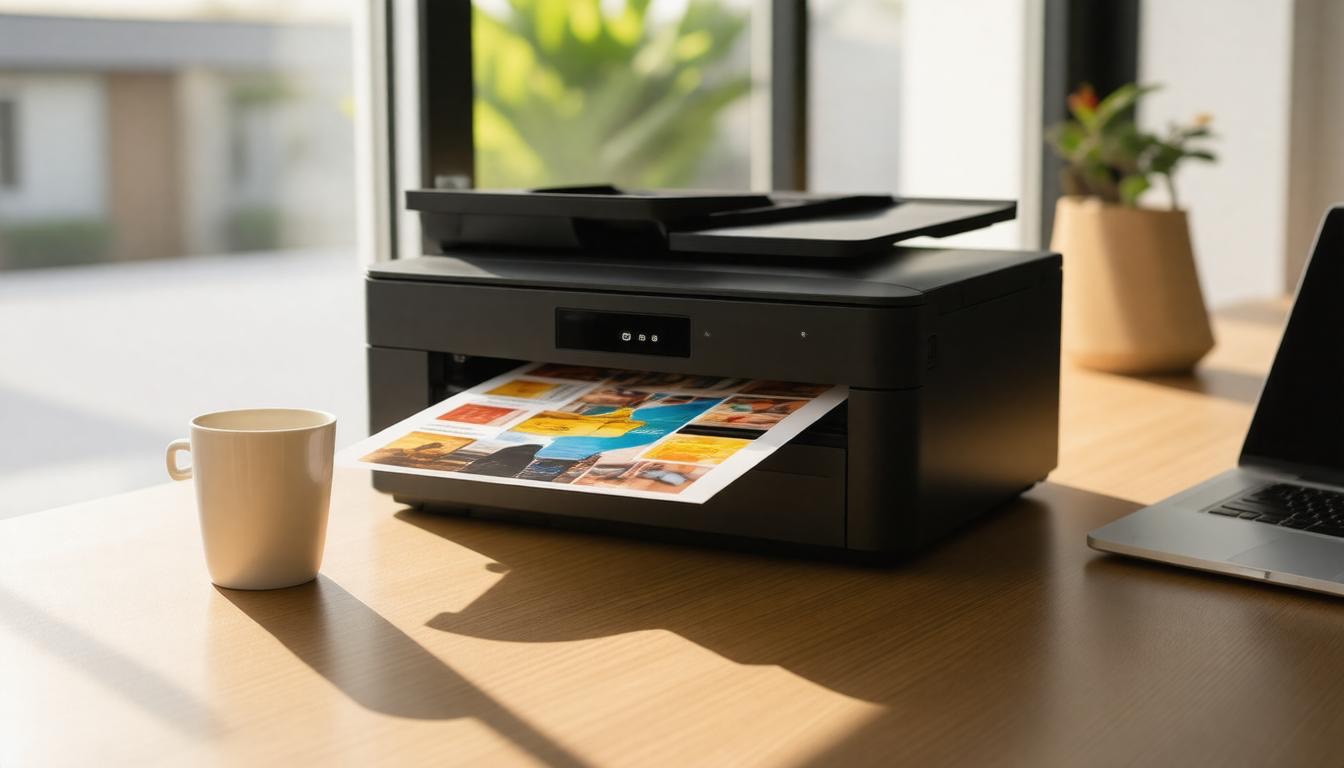
Of course, owning equipment outright often involves more upfront costs, but this investment can pay dividends over time.
For businesses with steady or high print volumes, purchasing a printer, along with a copier, tends to be more cost-effective in the long run.
The pros of investing upfront can lead to significant finance benefits, solidifying the case for owning rather than leasing when aiming for sustainability and growth. Although leasing spreads out expenses monthly, those payments can add up, often exceeding the total cost of ownership over several years.
Once we factor in maintenance and supplies managed efficiently—from buying toner in bulk to scheduling repairs proactively—the overall expense typically drops. It’s worth noting that printers and copiers generally last between five and seven years when properly maintained, which further improves ROI.
However, the cons of leasing must also be considered, such as potential long-term financial implications that rival ownership in cost.
Having no limits on printing capacity is another key advantage that ownership grants us directly.
Unlike leased machines, where contracts might impose restrictions like monthly page limits or color print caps, owned printers and copiers allow us to print as much as we want.
There are no surprise fees for extra pages or limited-use clauses. This freedom supports busy office environments where varied departments may require frequent use without constant concern for crossing thresholds, adding versatility to our document management capabilities.
And with full control over our equipment comes the ability to customize it according to evolving needs.
One of the most underrated perks of buying a printer is the flexibility it provides to adapt and upgrade hardware as needed. For instance, we can add extra paper trays or upgrade finishing options like stapling and hole punching—features that streamline workflows and enhance productivity.
Furthermore, because we own the device, installation of third-party software or integration with specialized office systems is possible without lease restrictions.
This tailoring ensures our printing setup—and our copier configuration—truly fits the specific demands of our business growth and changing priorities.
While ownership offers many compelling benefits, it also requires us to take responsibility for maintenance and upkeep—a consideration we must weigh carefully before deciding how best to manage our printing and copying infrastructure.
This responsibility represents one of the cons of ownership that cannot be overlooked, impacting both operational and financial strategies.
One of the first hurdles we encounter when purchasing a printer is the significant upfront investment. High-quality business printers and copiers, especially multifunction models capable of handling large volumes and advanced tasks, often come with price tags ranging from several hundred to a few thousand dollars.
Downsides of Buying a Printer
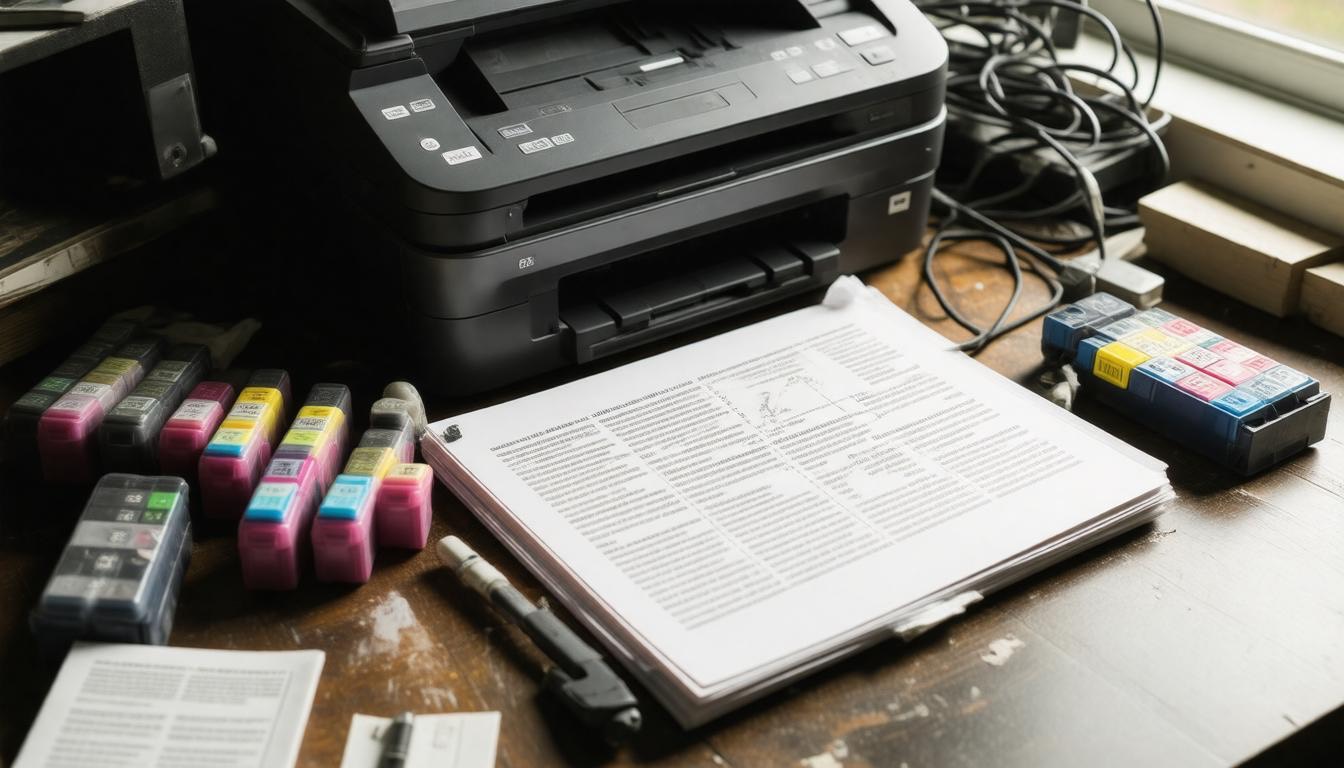
For small or growing businesses, allocating this capital all at once can strain cash flow and limit flexibility in other areas.Unlike leasing, where costs are spread evenly over time, buying requires committing a lump sum early on.
This financial burden can feel daunting but is a necessary consideration against long-term savings.
Additionally, when purchasing any equipment, including printers, it’s essential to consider the potential fee for warranties and maintenance services that are not included in the initial purchase price.
Owning a printer means embracing full responsibility for its upkeep.
Unlike leasing arrangements that usually include maintenance services, when we buy, we take on the unpredictable nature of repairs and upkeep costs, some of which might involve a service fee for repairs or technical assistance.
2. Maintenance Responsibility
Printers can develop issues such as paper jams, worn-out rollers, or toner delivery problems, which might require specialist attention or replacement parts.
Without a maintenance contract, these expenses, including any additional service fees, can quickly add up and sometimes interrupt daily operations.
It also places demands on internal IT staff or requires hiring external technicians—both adding indirect costs and logistical complexity to managing your devices, not to mention the potential fee for external services.
In today’s fast-moving tech landscape, printer technology evolves rapidly. What seems cutting-edge now can become obsolete within just a few years as new features like faster printing speeds, smarter security protocols, or energy-saving innovations emerge.
3. Risk of Obsolescence
When we own printers outright, replacing outdated machines becomes our responsibility—and this means additional capital expenditure sooner than expected if staying competitive and efficient is a priority.
It also involves factoring in disposal fees when retiring old equipment.
Balancing how long to keep existing equipment versus investing in upgrades poses an ongoing challenge for many businesses.
Finally, disposing of printers at the end of their usable life involves more than just throwing them away. Proper disposal must comply with environmental regulations due to components like batteries, circuit boards, and toners that contain hazardous materials.
4. Disposal Challenges
Improper disposal risks hefty fines and environmental harm. Therefore, professional e-waste recycling services are not merely recommended but often required to safely handle retired equipment, often incurring an associated fee.
This adds another layer of cost and responsibility to printer ownership that isn’t always obvious until the time comes, especially when factoring in potential disposal fees.
Understanding these challenges lays the groundwork for assessing the financial details involved in leasing versus buying. Next, we’ll look deeper into the numbers that influence smart business decisions around printing equipment investments.
When deciding between leasing or buying a printer, money talks—and listens closely.
The reality is that our budget and cash flow situation often steer the decision more than anything else. If our company’s cash on hand is limited, leasing naturally appeals because it requires a smaller upfront payment, preserving capital for other needs.
We spread out expenses as manageable monthly installments instead of an immediate large outlay, avoiding the large purchase fee associated with buying.
Key Financial Considerations
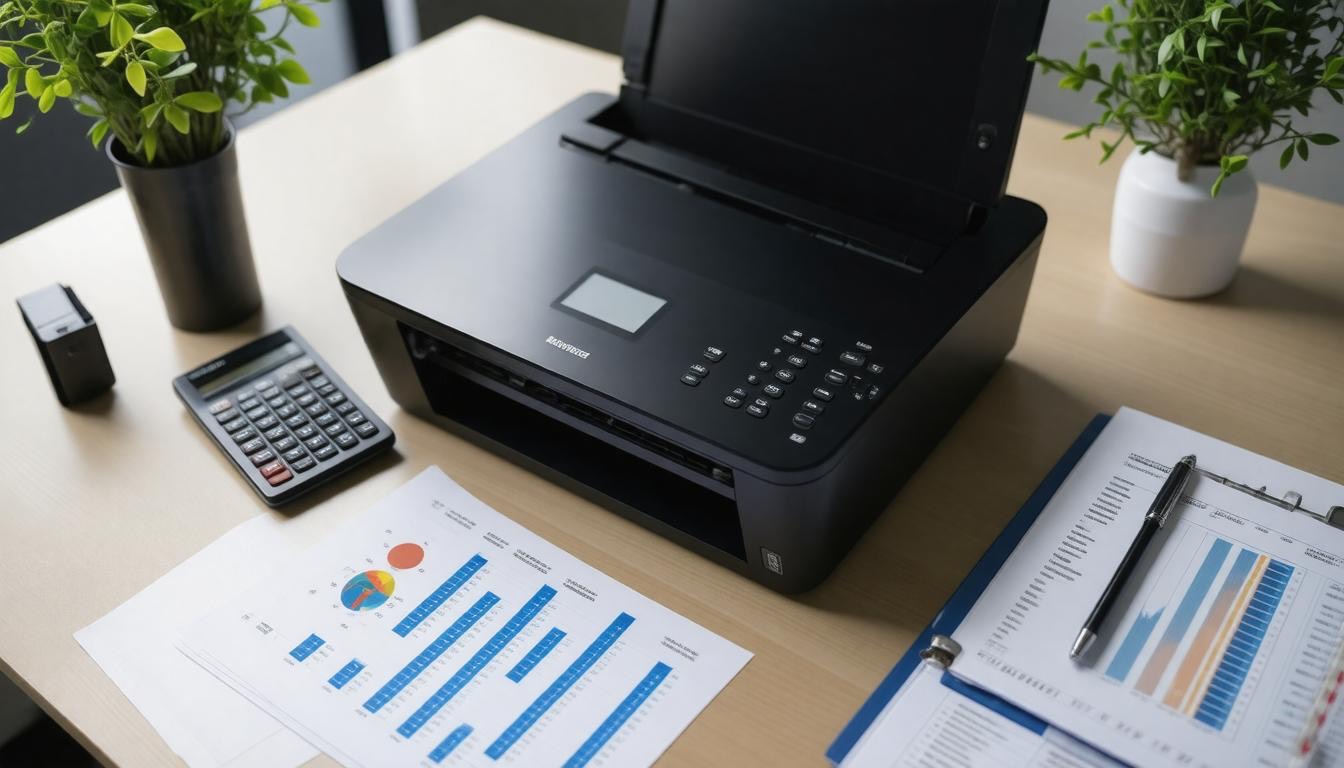
But if we have stable cash flow and want to shield ourselves from ongoing payments, buying can offer long-term savings since we eventually own the asset outright with no recurring lease fees. However, it’s important to plan for any potential resale or decommissioning fee that may arise.
It’s important to remember that buying a printer means tying up capital initially but converting that expense into a capital investment. This investment, in turn, interacts with tax rules, which adds complexity but also opportunities.
For instance, the IRS Section 179 provision allows businesses to deduct the full purchase price of qualifying equipment right away instead of depreciating over time, potentially offsetting the initial purchase fee.
It’s important to remember that buying a printer means tying up capital initially but converting that expense into a capital investment. This investment, in turn, interacts with tax rules, which adds complexity but also opportunities.
For instance, the IRS Section 179 provision allows businesses to deduct the full purchase price of qualifying equipment right away instead of depreciating over time. That’s a powerful incentive for companies looking to lower taxable income in the current fiscal year.
Conversely, leasing payments are classified as operational expenses—deductible as they come—offering predictable monthly deductions but no ownership benefit.
Beyond just the initial costs and tax breaks lies the nuance of total cost of ownership (TCO). This is where we look past sticker prices and compare all expenditures involved over the printer’s useful life.
With ownership, besides the purchase price, we factor in toner replacement, repairs, maintenance contracts, and eventual resale or disposal value.
Leasing typically bundles maintenance into the agreement, relieving us from unexpected repair bills but may include limits on printing volume or require excess usage fees.
Financing interest can also affect purchase TCO if we buy through loans instead of paying cash upfront.
Here’s a quick financial snapshot to consider:
| Aspect | Buying | Leasing |
|---|---|---|
| Upfront Cost | High | Low |
| Monthly Expenses | Maintenance + Supplies | Fixed Lease Payment |
| Tax Treatment | Capital Expense (Section 179) | Operating Expense Deduction |
| Long-Term Ownership | Yes | No |
| Flexibility on Upgrades | Limited | Usually Higher |
| Unexpected Repair Risk | On Us | Covered by Lease |
In balancing these financial elements, one takeaway is clear: there isn’t a perfect answer universally applicable to every business.
Our distinct circumstances—the shape of our budget, appetite for asset management, desire for latest technology access—all influence which path saves money and stress in the long run.
Financial considerations are only one piece of this puzzle; understanding how our daily printing demands interact with these choices will further clarify the best direction for our business’s productivity and growth.
Should I Lease or Buy a Printer For My Business

To choose wisely between leasing or buying a printer, we must start by taking a close look at what our office really requires on a day-to-day basis. This isn’t just about ink and paper—it’s about fitting the printer into the rhythm and growth of our business. The first major factor is print volume.
Offices printing hundreds or thousands of pages monthly face different challenges than those with sporadic, light printing needs.
For high-volume users, owning a robust, high-capacity printer often makes economic sense over time because the per-page cost decreases significantly; plus, they gain control over usage without worrying about mileage limits from leases.
Conversely, for lighter volume operations, leasing offers lower upfront costs and prevents paying for capacity that sits idle most of the time.
Alongside how much we print, predicting where our business is heading shapes this decision as well.
Growth projections come into play heavily here.
When we anticipate rapid expansion—say hiring new staff or branching into additional locations—leasing provides flexibility. It allows us to upgrade to more powerful machines or add units without being locked into outdated hardware.
That adaptability can be invaluable as technology advances quickly and office demands evolve.
However, if we expect steady operations with minimal changes in size or output, purchasing a printer might offer more value in the long run by avoiding continual leasing payments.
Then there’s the question of technology itself: How important is it that our equipment stays cutting-edge?
If having the latest features matters—for example, advanced scanning workflows integrated directly with cloud platforms like Microsoft 365 or Google Workspace—leaning towards leasing becomes attractive.
Leases usually include options for upgrades so we’re not stuck with older models that may lack intelligent scanning automation or enhanced security protocols critical in today’s IT environments.
On the other hand, buying anchors us to that specific technology snapshot; it can last years but may become obsolete compared to competitors who lease and continuously modernize.
Just as important is understanding who will keep this piece of technology running smoothly.
Maintenance capacity is an often-overlooked aspect of this equation. Does our office have IT personnel trained in troubleshooting printer issues and performing preventive upkeep?
If yes, owning makes more sense since we can handle repairs internally and schedule servicing on our own timetable.
However, if technical expertise is limited, leasing—and specifically managed print services—takes on maintenance responsibility.
This often includes firmware updates (like Toshiba’s self-healing BIOS), proactive supply monitoring, and quick repair turnaround.
Such arrangements reduce downtime risks and offload headaches related to securing devices from cyber threats or regular wear.
| Criterion | Leasing | Buying |
|---|---|---|
| Initial Cost | Low | High |
| Long-term Cost | Potentially higher | Potentially lower |
| Ownership | Leasing Company | Business |
| Maintenance | Usually included | Business responsibility |
| Upgradability | Easy | Requires new purchase |
| Flexibility | High | Low |
| Tax Benefits | Operating expense deduction | Section 179 deduction |
By carefully weighing these criteria against our specific office circumstances—considering page volumes, growth plans, technological priorities, and maintenance abilities—we gain clarity that guides us toward either leasing for flexibility and ease or buying for long-term cost efficiency and control.
With these insights in mind, our next step is understanding how security concerns influence this critical infrastructure choice in today’s connected workplaces.
Ultimately, deciding whether to lease or buy a printer hinges on balancing flexibility, financial considerations, technology demands, and support capabilities unique to your business.
Taking time to assess these factors ensures your print strategy supports growth while minimizing risk.

Author
Tracy Jackson
I'm an experienced content writer and marketing strategist passionate about empowering people to succeed. With 15+ years in the industry, I blend creative storytelling with data-driven marketing to deliver real results. As a proud dad of three, I bring the same dedication to my family as I do to every piece of content I create.
Recent Posts
Should I Lease or Buy a Printer for My Business? Which is Better?
Choosing the right printer for your business might
April 15, 2026
Managed Print Services for Small Business: Is There Benefits and Cost Savings?
Printing might seem like a simple office task, but
April 15, 2026
Laser vs Inkjet Cost Per Page for Office: Which One Saves You More?
Choosing the right printer for your office isn’t a
April 14, 2026
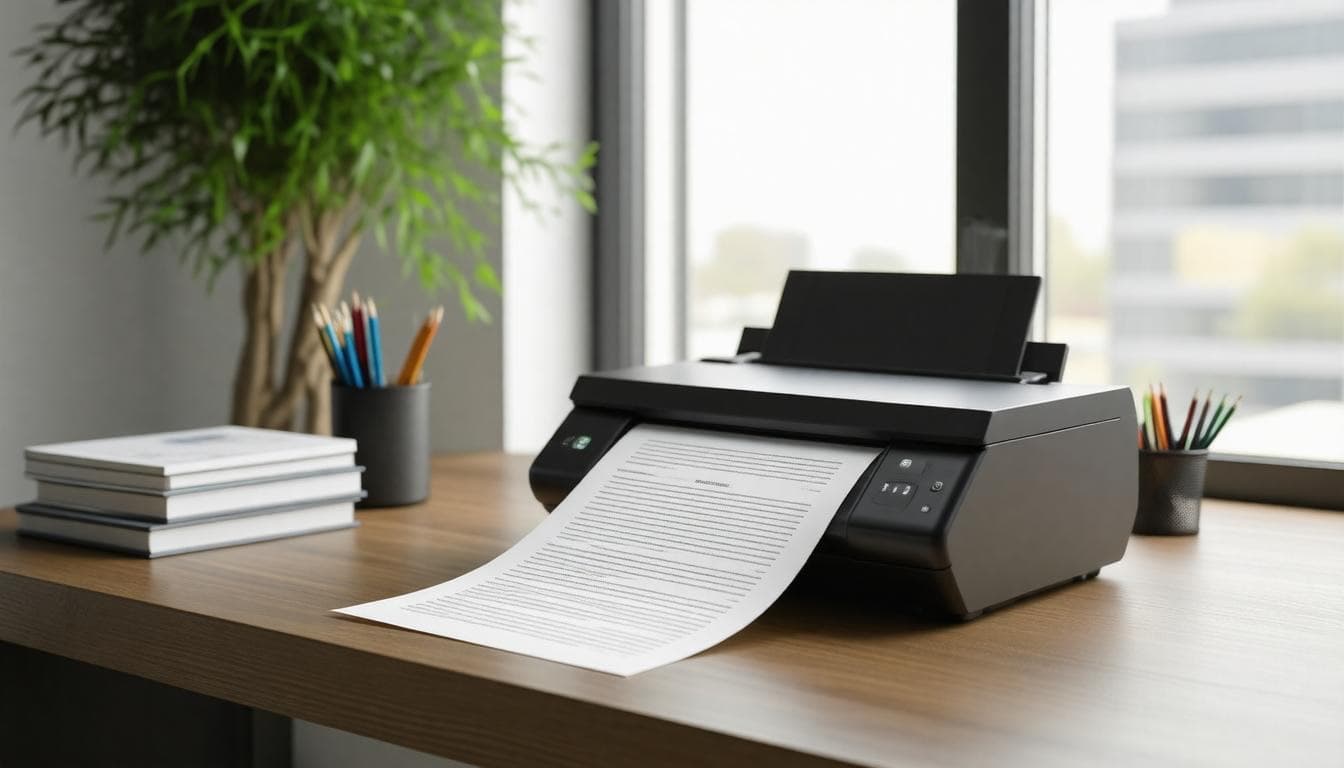
Best Printer for Small Law Firm: How to Choose the Perfect Printer
Finding the best printer for small law firm can fe
April 14, 2026

Perplexity vs ChatGPT Subscription Value: Is It Worth It In 2026?
Choosing the right AI assistant subscription can f
April 10, 2026

Claude Pro vs Team Plan: Which is the best in 2026?
Choosing the right AI tool can feel a bit like pic
April 9, 2026
Newsletter
Don't miss a thing!
Sign up to receive daily news