
 Tracy Jackson15 yrs in online marketing
Best AI Writing Tools in 2026: 13 Picks Compared
Table of Contents
The tool that kicked off AI writing is now playing catch-up. Jasper was the pioneer, but in my experience it wrote generic copy with no real research behind it. Meanwhile, Writesonic, Surfer, and Frase now sell AI search visibility, and Copy.ai has turned toward sales and marketing teams.
That’s why so many lists of the best AI writing tools are already out of date. I checked every tool’s own pricing page in November 2026 and sorted 13 of them by the job you actually need done: general writing, marketing copy, SEO content, editing, or fiction.
I’ve used six of them myself: ChatGPT, Claude, Gemini, Jasper, Surfer, and Grammarly. Every entry says whether it’s a tested or research-based pick, and my top overall pick won’t cost you a cent to start.
The short answer: the best AI writing tool depends on the job. Here’s my pick for each one:
- Best overall and best for long-form writing: Claude by Anthropic (tested), for the cleanest research, the clearest answers, and the best coding help. Its free plan makes it the best free option, too.
- Best all-rounder for brainstorming and images: ChatGPT by OpenAI (tested), as long as you proofread any words inside the images.
- Best for talking instead of typing: Gemini by Google (tested), which has the best speech-to-text of the big three.
- Best for marketing copy: Copy.ai (research-based), for small teams that want one shared plan.
- Best for SEO research: Surfer (tested), for seeing what Google’s results reward, though not for the writing itself.
- Best for editing and grammar: Grammarly (tested), for spelling and sentence-level fixes.
- Best for paraphrasing: QuillBot (research-based), for rewording and summarizing.
- Best for fiction and creative writing: Sudowrite (research-based), built specifically for novelists.
Disclaimer: If you buy something using the links in this article, I may receive a commission at no extra cost to you.
What Are AI Writing Tools?
AI writing tools are apps that draft, rewrite, or edit text from a short prompt, using large language models trained on huge amounts of writing. Some are general assistants you chat with, while others are built for one job, like ad copy, SEO articles, or grammar. All of them still need a human to check facts and add real expertise.
Why the type matters: a general assistant can do almost anything decently, but a specialist tool saves time on the one job it’s built for. That’s why this guide groups the tools by job: general writing, marketing copy, SEO content, editing, and fiction.
The Best AI Writing Tools at a Glance
This table compares all 13 tools on the job each does best, whether it has a free plan or a free trial, and its lowest paid price. Every price comes from the vendor’s own pricing page, checked November 15 and 16, 2026. The last column shows whether I’ve tested the tool myself or picked it from research.
| Tool | Best for | Free plan or free trial | Lowest paid price | Tested or research-based |
| Claude | Overall writing and research | Free plan | $17/mo billed annually | Tested |
| ChatGPT | All-rounder and images | Free plan | $8/mo (Go) | Tested |
| Gemini | Speech-to-text | Free plan | $4.99/mo (Google AI Plus) | Tested |
| Jasper | Marketing teams at scale | 7-day free trial | $59/mo per seat billed yearly | Tested |
| Copy.ai | Small marketing teams | None listed | $24/mo billed annually (5 seats) | Research-based |
| Rytr | Budget copywriting | Free plan | $7.50/mo billed annually | Research-based |
| Anyword | Solo marketers | 7-day free trial | $39/mo billed yearly | Research-based |
| Surfer | SEO optimization | Not stated | $99/mo billed yearly | Tested |
| Frase | Budget SEO content | 7-day free trial | $39/mo billed yearly | Research-based |
| Writesonic | AI search visibility | Free trial | $79/mo billed annually | Research-based |
| Grammarly | Editing | Free plan; Pro free trial | $12/mo (Pro) | Tested |
| QuillBot | Paraphrasing | Free plan | $8.33/mo billed annually | Research-based |
| Sudowrite | Fiction | Free trial | $10/mo billed yearly | Research-based |
How I Picked These Tools
I sorted these 13 tools by the jobs people actually use an AI writer for, then judged each one on output quality, price, and free access. I’ve used six of them myself, and the other seven are research-based picks. I checked every price on the vendor’s own pricing page in November 2026, and commissions never decide a ranking.
My full process is on my review methodology page.
Best General AI Writing Assistants
General AI assistants like ChatGPT, Claude, and Gemini handle the widest range of writing jobs, from first drafts and outlines to emails, summaries, and rewrites. They’re the best starting point for most people because one subscription covers almost everything. The trade-off is that you supply the structure, voice, and fact-checking yourself.
Claude
Tested pick. Best for: research, clear answers, and coding.
Claude, made by Anthropic, is the best AI tool out there, in my opinion. Its research is cleaner, its answers are clearer, and Claude Code has been a game changer.
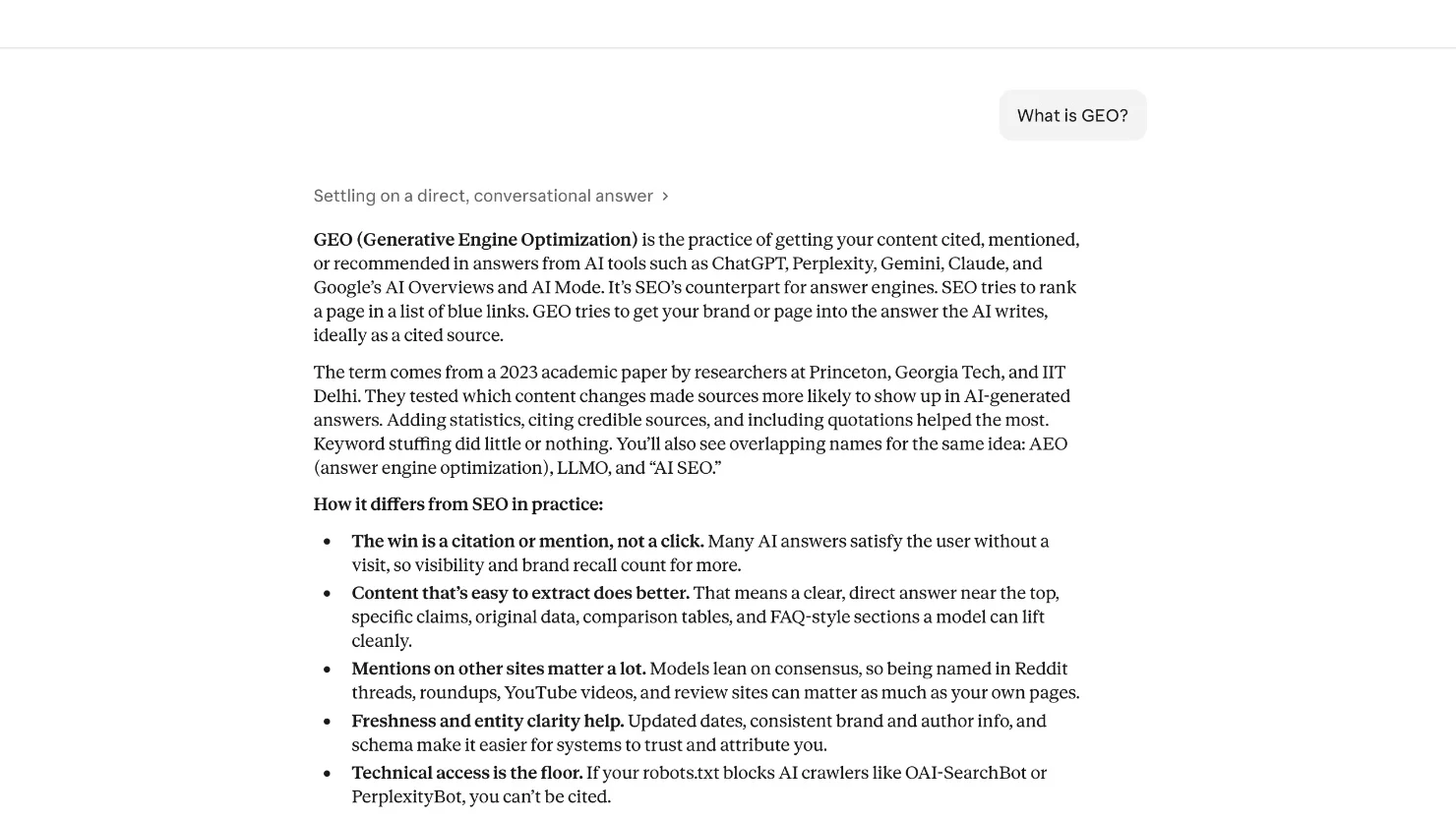
All three general assistants can write code, but in my experience Claude wins. Its growing list of connectors also makes it easier to plug into the other tools you already use.
The one drawback I’ve hit is the microphone: when you talk to Claude instead of typing, it’s too sensitive.
Pricing: Claude has a free plan, and Pro costs $20 a month, or $17 a month billed annually, according to Anthropic’s pricing page (November 2026). Max plans start at $100 a month for heavier use.
ChatGPT
Tested pick. Best for: an all-in-one app for research, brainstorming, and images.
I use ChatGPT, made by OpenAI, for research and for creating images. It’s easy to use, it has different modes for different jobs, and its image creation is genuinely strong.
The catch is the text inside those images: it constantly misspells words, so proofread every image before you publish it. When I tested the two head to head in ChatGPT vs Claude for business writing, Claude won with better, clearer answers.
Pricing: ChatGPT has a free plan, Go costs $8 a month, Plus costs $20 a month, and Pro starts at $100 a month, according to OpenAI’s pricing page (November 2026). OpenAI notes that Go may include ads.
Gemini
Tested pick. Best for: speaking your ideas instead of typing them.
Gemini, Google’s AI assistant, is a good tool to work with, and its speech-to-text is the best of the three general assistants. If you think out loud, it’s the one to try first.
Its writing needs work, though. In my experience, its drafts just aren’t detailed enough.
Pricing: you can use Gemini free, and the paid Google AI plans raise your usage limits and add features like Deep Research. Google AI Plus costs $4.99 a month and Pro costs $19.99 a month, according to Google’s Gemini plans page (November 2026), and both had lower introductory prices for the first 3 months.
Best AI Writing Tools for Marketing Copy
Marketing-focused AI writers like Jasper, Copy.ai, Rytr, and Anyword are built around templates for ads, landing pages, emails, and product descriptions. Their edge over general assistants is brand voice controls and ready-made workflows for teams. They make the most sense if you write a lot of short-form marketing copy every week.

Jasper
Tested pick. Best for: marketing teams that need brand-voice controls at scale.
Jasper was great when it launched, but in my experience its copy stayed generic while the general assistants above pulled ahead. My older Jasper AI review has the full history.
Today, Jasper pitches itself as an on-brand marketing platform, with AI agents for marketing workflows, brand voices, and audience settings. Pro costs $59 a month per seat billed yearly, or $69 billed monthly, with a 7-day free trial, according to Jasper’s pricing page (November 2026). That makes it a team platform now, not a cheap solo writer.
Copy.ai
Research-based pick. Best for: small marketing teams on a budget. It’s my pick for marketing copy.
Copy.ai has shifted its focus toward sales and marketing teams. Its one self-serve plan, Chat, includes 5 seats, unlimited words in chat, and access to OpenAI, Anthropic, and Gemini models in one place.
Pricing: Chat costs $24 a month billed annually ($288 a year), or $29 billed monthly, according to Copy.ai’s pricing page (November 2026). I didn’t see a free plan or free trial listed.
Why it wins for teams: split across 5 seats, the annual price works out to under $5 a person, while Jasper Pro costs $59 per seat billed yearly (November 2026). The catch is that solo writers pay for seats they won’t use. See my Copy.ai review for more.
Rytr
Research-based pick. Best for: the cheapest way into AI copywriting.
Rytr has a real free plan with 10,000 characters a month, 40+ writing use cases, and 30+ languages, according to Rytr’s pricing page (November 2026). Lite removes the character cap for $7.50 a month billed annually, or $9 monthly.
The catch: Rytr’s higher Personal and Pro tiers mostly add relationship and outreach features, not better writing. Most writers can stop at Lite, and there’s more in my Rytr review.
Anyword
Research-based pick. Best for: solo marketers who want copy scored before it goes live.
Anyword predicts how your copy will perform, so you can compare versions before you publish. Starter includes 1 seat, unlimited copy generation, 1 brand voice, 100+ marketing templates, and a Blog Wizard with a plagiarism checker.
Pricing: Starter costs $39 a month billed yearly, or $49 monthly, with a 7-day free trial, according to Anyword’s pricing page (November 2026). There’s no free plan, and the number of performance predictions is capped by plan. More in my Anyword review.
Best AI Writing Tools for SEO Content
SEO writing tools like Surfer, Frase, and Writesonic combine AI drafting with search data, so your content covers the terms and questions top-ranking pages already answer. All three now also track how AI search tools mention your brand. They work best alongside a general assistant, not as a replacement for one.
Surfer
Tested pick. Best for: SEO research, not writing.
Surfer is great for SEO and weak at writing, because the content it generates is generic. I used it mainly for the SEO advantage.
Where it shines is showing you what Google’s search results reward and what your page needs to climb the rankings. Draft with a stronger writer, then use Surfer to tune the page, and see my Surfer review for the SEO side in depth.
Pricing: Surfer’s writing plans start with Standard at $99 a month billed yearly, or $119 monthly, according to Surfer’s pricing page (November 2026). Standard covers 30 documents a month. A separate AI Search Analytics plan only tracks your brand in AI search and doesn’t write.
Frase
Research-based pick. Best for: an affordable entry into SEO content tools.
Frase drafts content and scores it for both SEO and GEO (generative engine optimization), which means getting cited in AI answers. Its Starter plan also tracks your visibility on ChatGPT and Google AI and publishes straight to WordPress, Webflow, Sanity, or Wix.
Pricing: Starter costs $39 a month billed yearly ($468 a year), or $49 monthly, according to Frase’s pricing page (November 2026). Each self-serve plan has a 7-day free trial with no credit card.
The catch: Starter covers 1 seat, 1 site, and 10 articles a month, which is tight for a busy blog. More in my Frase review.
Writesonic
Research-based pick. Best for: tracking how AI search engines talk about your brand.
Writesonic now calls itself an AI search visibility platform. It tracks your brand across ChatGPT, Gemini, and Google AI Overviews, and every self-serve plan includes AI articles, starting at 15 a month.
Pricing: Starter costs $79 a month billed annually, or $99 monthly, with a free trial, according to Writesonic’s pricing page (November 2026). That’s a lot to pay if you only want a writer. More in my Writesonic review.
Best AI Editing and Rewriting Tools
AI editing tools like Grammarly and QuillBot don’t write your first draft, they make the draft you have cleaner, clearer, and more consistent. They catch grammar and tone problems, suggest rewrites, and help you say the same thing in fewer words. Pair one with any writing tool on this list as a final pass.
Grammarly
Tested pick. Best for: spelling, sentence, and paragraph corrections.
Grammarly is great at fixing spelling and tightening sentences and paragraphs. That’s the job to use it for.
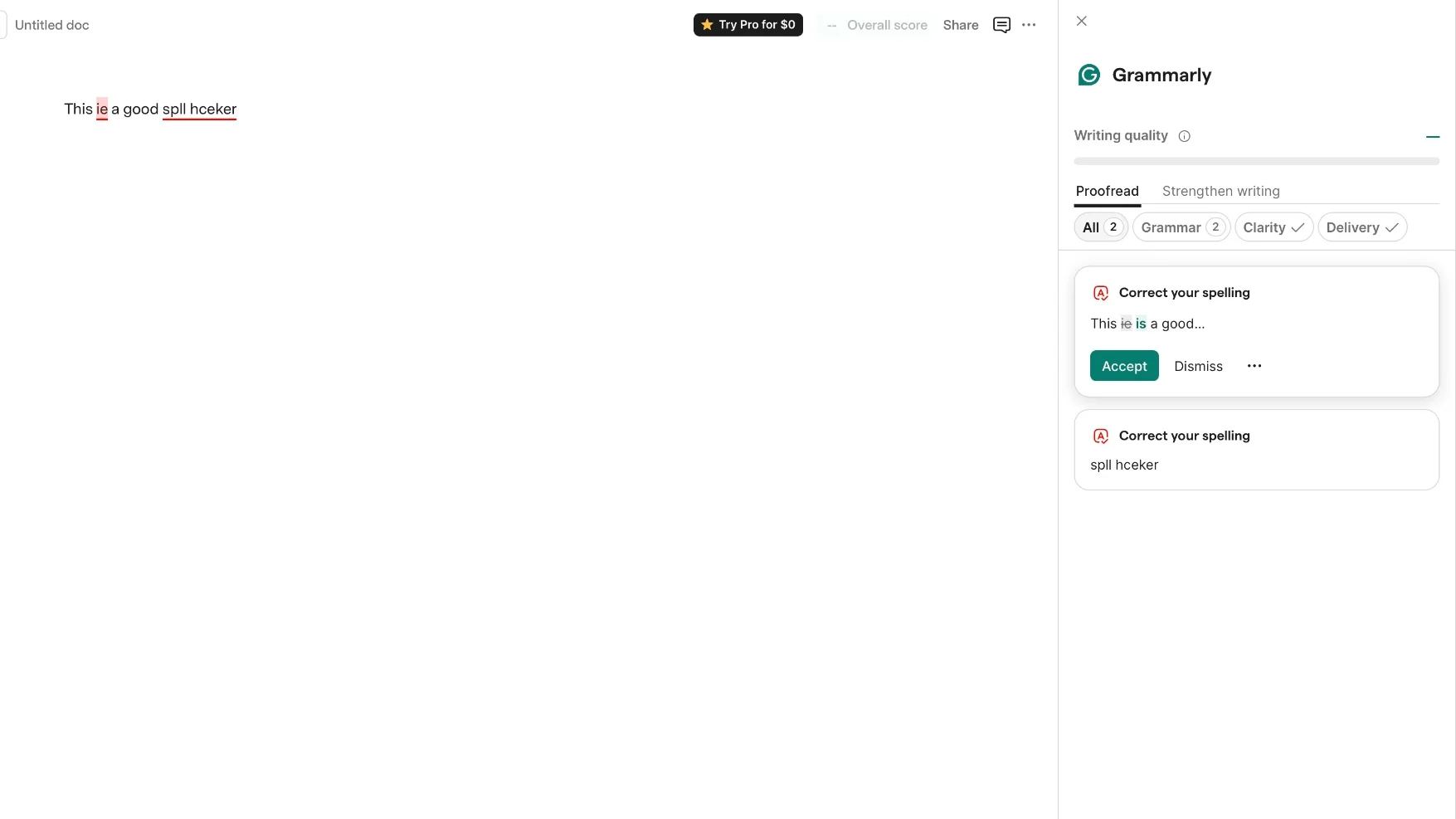
Its AI writing is another story. The text is generic, and in my experience it tends to get flagged as AI-generated.
Pricing: Grammarly’s free plan covers spelling and grammar fixes, tone detection, and 100 AI prompts. Pro is listed at $12 a month with a free trial, according to Grammarly’s plans page (November 2026). It adds full-sentence rewrites, plagiarism and AI-text detection, and 2,000 AI prompts.
My older review, is Grammarly Premium worth it, covers the paid plan in depth. On Grammarly’s current plans page, that paid tier is called Pro.
QuillBot
Research-based pick. Best for: paraphrasing, rewording, and summarizing.
QuillBot‘s free plan paraphrases up to 125 words at a time in 2 modes, fixes basic grammar errors, and writes basic summaries. Premium unlocks unlimited paraphrasing modes, advanced grammar suggestions, custom summaries, and plagiarism checks.
Pricing: Premium costs $8.33 a month billed annually, or $19.95 monthly, according to QuillBot’s Premium page (November 2026). Usage limits still apply, and I didn’t see a free trial listed.
The catch: QuillBot also offers an AI humanizer and an AI detector. Rewording AI text doesn’t add the experience and fact-checking readers need, so treat those as editing aids, not shortcuts.
Best AI Writing Tool for Fiction
Fiction writers need something different from marketers: help with plot, character, description, and keeping a long story consistent. Sudowrite is built for that, with tools aimed at novelists rather than copywriters. If you write books or short stories, a fiction-specific tool will fit your workflow better than a general assistant.

Sudowrite
Research-based pick. Best for: novelists and writers working on long fiction.
Sudowrite can write, rewrite, describe, and expand scenes, match your writing style, and keep details consistent across a series. It runs on its own fiction models, Muse and Ballad, plus about 30 other models.
Pricing: Hobby & Student costs $10 a month billed yearly, or $19 monthly, according to Sudowrite’s pricing page (November 2026). Every plan has a free trial with no credit card, and Professional ($22 a month billed yearly) adds developmental edits, line edits, and beta reads.
If you write scripts instead of novels, my roundup of screenwriting software is the better fit.
What About Headlime?
Headlime is an AI copywriting tool built around templates for headlines, ads, landing pages, and blog posts. It’s a research-based mention: its Individual plan costs $59 a month for 1,500 credits, according to Headlime’s pricing page (November 2026). For most writers, Rytr or Copy.ai covers similar jobs for less.
Headlime lets you try it free with no credit card. Its Business plan starts at $399 a month for 3 members, according to Headlime’s pricing page.
How to Choose the Right AI Writing Tool
The right AI writing tool depends on what you write most, how much you’ll write, and whether you need team features. Start with the job, not the brand: general drafting, marketing copy, SEO articles, editing, or fiction. Then test your top pick on a real piece of your own content before you commit to a paid plan.
What you write most: blog posts and emails point to Claude or ChatGPT. Ads and landing pages point to Copy.ai or Rytr, and articles meant to rank point to Surfer or Frase.
How much you’ll write: light users can often stay on a free plan, like Claude’s or Rytr’s. Daily writers should compare usage limits, not just the monthly price.
Who else uses it: solo creators rarely need team seats or shared brand voice. Agencies and content teams usually do, and that’s where plan prices jump.
What AI Writing Tools Still Can’t Do
AI writing tools can draft fast, but they can’t verify facts, bring real experience, or know your audience the way you do. They sometimes state wrong information confidently, and their default voice tends to sound generic. Treat every AI draft as a starting point that needs your expertise, your edits, and a fact-check before it goes live.
They get facts wrong: AI tools can invent statistics, sources, and details that sound right. Check every number and claim against its original source.
They sound like everyone else: without your examples and opinions, AI copy reads like a thousand other pages. Your experience is the part readers and search engines can’t get anywhere else.
They need a clear brief: vague prompts get vague drafts. The more context you give about audience, goal, and tone, the less you’ll rewrite. If you blog, my guide to using AI writing software for blogging walks through the full workflow.
Frequently Asked Questions
What is the best AI writing tool?
The best AI writing tool depends on the job. In my experience, Claude is the best overall, with cleaner research and clearer answers than ChatGPT or Gemini. For marketing copy, small teams should look at Copy.ai; for fiction, Sudowrite; for editing, Grammarly; and for paraphrasing, QuillBot.
Is ChatGPT or Claude better for writing?
In my experience, Claude is better for writing. When I compared them head to head, Claude gave clearer, better-organized answers and cleaner research. ChatGPT is still the stronger all-rounder if you also want image creation and several modes in one app, so the right pick depends on whether you need more than text.
What AI is better than ChatGPT for writing?
For most writing, Claude is the AI I’d choose over ChatGPT, because its drafts and research read cleaner in my experience. Specialist tools can also beat ChatGPT at one job: Sudowrite for fiction, Grammarly for editing, QuillBot for paraphrasing, and Surfer or Frase for SEO content. ChatGPT still leads for image creation.
Is there a free AI writing tool?
Yes, several AI writing tools have free plans, not just free trials. Claude, ChatGPT, and Gemini all have free versions, Rytr’s free plan includes 10,000 characters a month (November 2026), and Grammarly and QuillBot have free editing plans. Free plans cap your usage, so daily writers will eventually hit their limits.
Can AI writing tools replace human writers?
No, AI writing tools can’t replace human writers for content that needs expertise, original insight, or real experience. They speed up drafting, outlining, and editing, but they can’t fact-check themselves or tell your story. The best results come from using AI for speed and a human for judgment, accuracy, and voice.
Is AI-written content good for SEO?
AI-written content can rank if it’s genuinely helpful, accurate, and edited by someone who knows the topic. Thin, unedited AI text that repeats what’s already online tends to struggle. Use AI to draft faster, then add original examples, verified facts, and clear answers to the questions your readers actually ask.
Are paid AI writing tools worth it?
Paid AI writing tools are worth it if you write regularly and the time you save is worth more than the subscription. Paid plans usually raise usage limits and add features like brand voice, team seats, or SEO data. If you only write occasionally, start with a free plan and upgrade once you hit its limits.
The Bottom Line
Claude is my pick for most people. It’s free to start, its answers are the clearest I’ve found, and it wins at research and code.
Pair it with Grammarly for a final edit, and add Surfer or Frase if you publish to rank on Google. Small marketing teams should look at Copy.ai, and novelists should try Sudowrite.
Whatever you choose, start on a free plan or a free trial. Test it on a real piece of your own writing before you pay.
Sources
Anthropic: Claude plans and pricing (checked November 15, 2026)
OpenAI: ChatGPT pricing (checked November 15, 2026)
Google: Gemini and Google AI plans (checked November 15, 2026)
Jasper: plans and pricing (checked November 15, 2026)
Copy.ai: pricing (checked November 15, 2026)
Rytr: pricing (checked November 15, 2026)
Anyword: pricing and plans (checked November 15, 2026)
Surfer: pricing (checked November 15, 2026)
Frase: pricing (checked November 16, 2026)
Writesonic: pricing (checked November 15, 2026)
Grammarly: plans and pricing (checked November 16, 2026)
QuillBot: Premium plans (checked November 16, 2026)

Recent Posts
Monday.com Review 2026: Is It Still the Best Work OS?
I tested Monday.com against ClickUp, Asana, and Wr...
Updated July 27, 2026

AI Writing Software for Blogging in 2026: Best Tools + How to Stay AI-Search Vis...
The best AI writing software for blogging in 2026 ...
Updated July 20, 2026
HubSpot Review 2026: Is It Worth the Cost?
I tested HubSpot’s free CRM, Starter, and Pr...
Updated July 20, 2026

Teamwork.com Review 2026: Is It the Best PM Tool for Client Work?
I tested Teamwork.com for agency and client projec...
Updated May 29, 2026
Wrike Review 2026: Is It Worth the Cost?
I tested Wrike in real enterprise workflows. Here&...
Updated May 29, 2026
Asana Review 2026: Is It Worth It? (Honest, In-Depth Analysis)
I tested Asana across real team workflows. Here...
Updated May 29, 2026
Newsletter
Don't miss a thing!
Sign up to receive daily news