 Tracy Jackson15 yrs in online marketing
8 Best Ways to Make Money Online in 2026 (Realistic & Legit)
Table of Contents
The best ways to make money online fall into two camps: active service work that pays fast, and scalable products that pay later. Which one fits you comes down to one question. Do you need cash this month, or income that compounds over the next year?
Search “make money online” and you’ll drown in hype. Overnight riches, passive-income fantasies, and “systems” that mostly make money for the person selling them. This guide is the opposite of that.
Below are eight realistic, legit methods, with honest income expectations, real startup steps, and the platforms worth your time. Some pay within days. Some take months to build, and none of them are get-rich-quick.
One thing has genuinely changed since I first wrote this guide: AI. Every method below is now faster or cheaper to start because of it. I’ll flag the AI angle throughout, because ignoring it now would be like ignoring the internet in 2005.
Disclaimer: If you buy something using the links in this article, I may receive a commission at no extra cost to you.
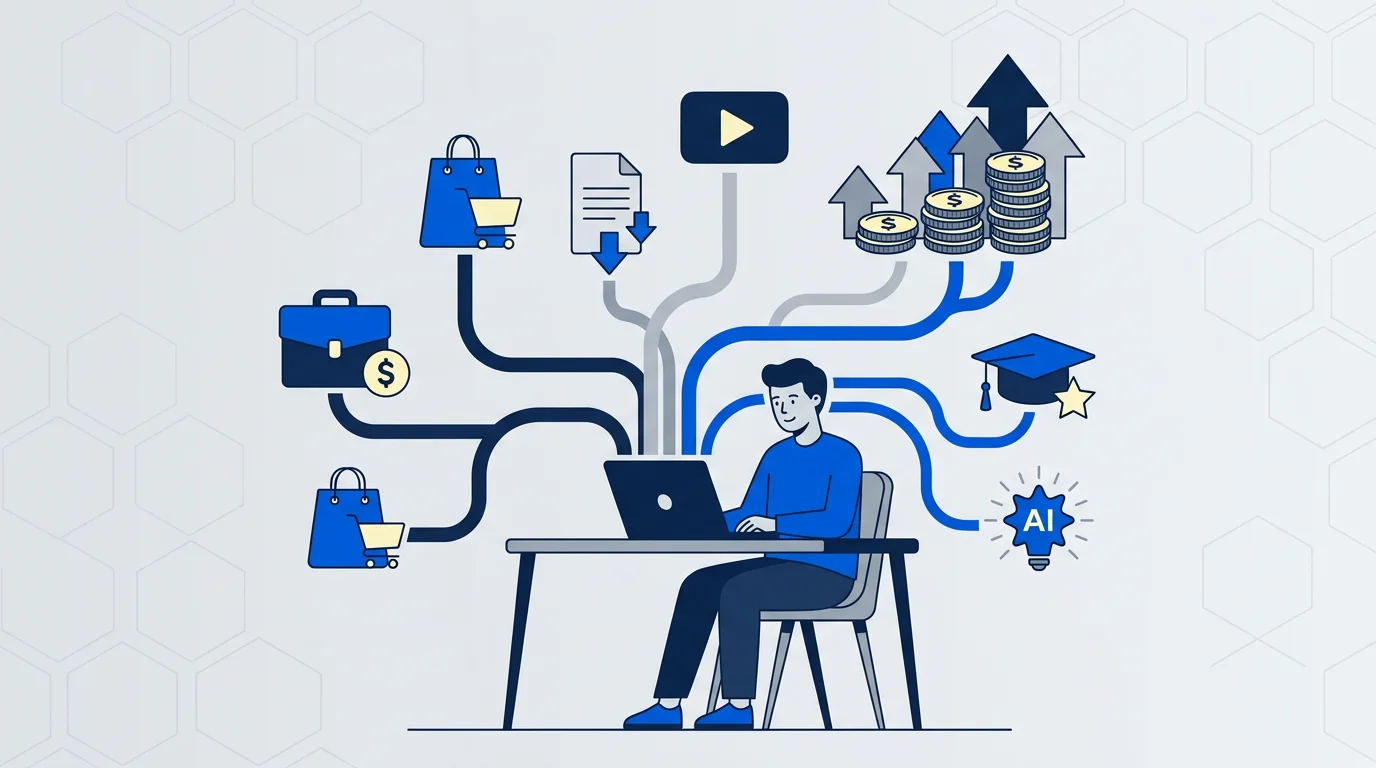
The 8 Best Ways to Make Money Online (At a Glance)
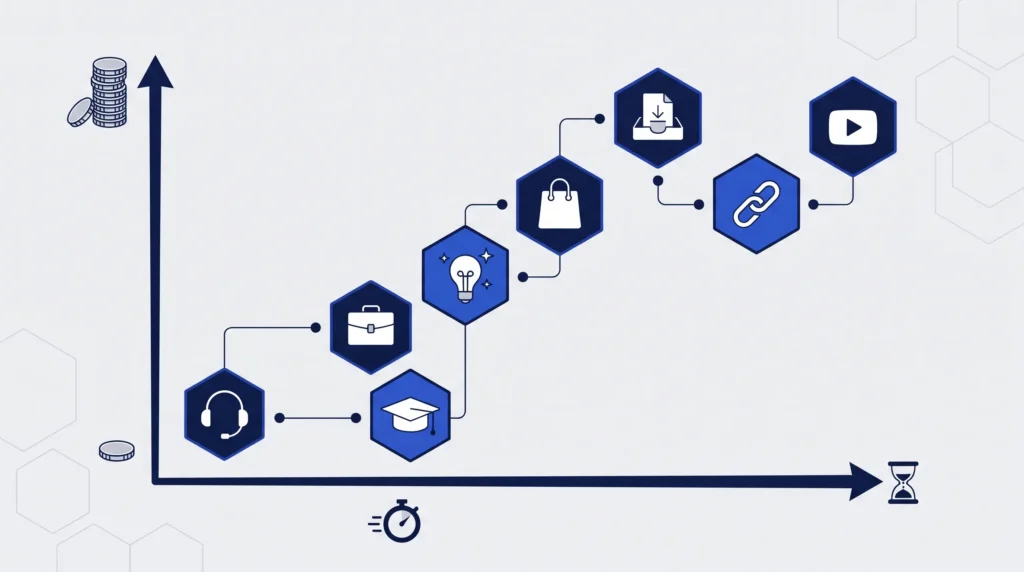
Freelancing is the fastest way to earn online, digital products scale the best, and print-on-demand lets you sell physical goods without inventory. Content creation and affiliate marketing take longest but compound. Tutoring, virtual assistance, and AI services round out the list as low-barrier options that pay within weeks.
Here’s the quick version. Where a method has reliable pay data, I’ve included it and cited the source in that method’s section.
| Method | Realistic income | Startup cost | Difficulty | Time to $1 |
| 1. Freelancing | $10–$120+/hr | $0–low | Low | Days–weeks |
| 2. Digital products | Varies widely, scales well | Low | Medium | Weeks–months |
| 3. Print-on-demand / e-commerce | Varies widely, thin margins | Low–med | Medium | Weeks–months |
| 4. Affiliate & blogging | Varies widely, compounds | Low | Medium | Months |
| 5. YouTube, podcasts & content | Near zero at first, then varies | Low | High | Months to a year+ |
| 6. Tutoring & courses | ~$21/hr median | Low | Low–med | Days–weeks |
| 7. Virtual assistance | Varies by service | $0–low | Low | Days–weeks |
| 8. Make money with AI | Tracks freelance rates | Low | Medium | Weeks |
Your results depend on skill, effort, and consistency.
1. Freelancing and Service Work (Fastest Cash)
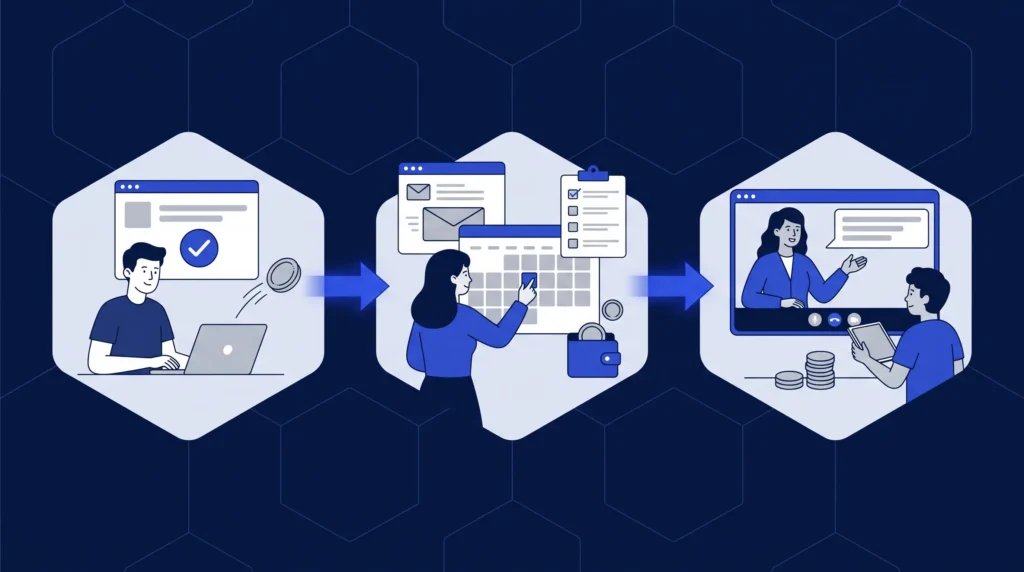
Freelancing is the fastest realistic way to make money online. You sell a skill you already have, like writing, design, video editing, or programming, to clients who need it now. There’s no audience to build and no product to create, so if you can do something useful, someone will pay for it this week.
Best for: anyone with a usable skill who wants a first dollar fast. It’s the method I recommend most to beginners.
What you can sell: writing, web design, web development, translation, video editing, and admin work all have steady demand. Designers need a portfolio more than a degree. Developers and translators earn more once they specialize in one industry.
Realistic income: on Upwork, beginners typically charge $10–$25 an hour, intermediate freelancers $25–$60, and specialists $60–$120 or more, according to Upwork’s 2026 hourly rate guide (November 2026). Those are gross rates: Upwork takes a service fee of 0% to 15% per contract out of your earnings, according to Upwork’s fee help page (as of November 2026). Specialists earn multiples of generalists.
How to start: pick one skill and build a simple portfolio, even two or three sample pieces. Set up profiles on the major platforms. Start slightly below market rate to win your first reviews, then raise prices fast.
Platforms: Upwork, Fiverr, and Contra are the obvious starting points. I’ve tested Fiverr; Upwork and Contra are research-based picks.
The pro move: big gig boards can turn into a race to the bottom on price. Once you have a few reviews, pitch clients directly on LinkedIn or in local business groups. Build a simple portfolio site, so clients can find you without a platform taking a cut.
The AI angle: the freelancers winning right now use AI to deliver faster and sell outcomes, not hours. A writer who researches and drafts with AI, then adds real expertise and editing, can take on more work at a higher effective rate.
2. Selling Digital Products (Scalable Income)
Selling digital products is the most scalable way to make money online. You create something once, like an ebook, a template, or a mini-course, and sell it again and again with no inventory or shipping. The upfront work is real, but every sale after that is close to pure margin.
Best for: people who want to build something once and sell it for years. This is the method I’d point most people toward for long-term income.
What to sell: ebooks, printable templates, Notion and Canva templates, resume guides, presets, and mini-courses. The best products solve one specific problem for one specific buyer.
Realistic income: anywhere from occasional sales to a real income stream for a creator with an audience. The leverage is the appeal: a $30 template that sells 200 times is $6,000 from work you did once.
How to start: pick a problem your skills can solve and build one focused product. Get it right before you expand. AI tools make the first draft of a template, guide, or course outline dramatically faster.
Ebooks specifically: publish on Amazon KDP for reach, or sell from your own site for more control and an email list. Export to ePub or PDF, then send buyers to a dedicated sales page. My Leadpages review covers one tool for building those pages.
Platforms: Gumroad and Payhip are the simplest storefronts, and Etsy works well for printables. Gumroad, Payhip, and Etsy are research-based picks.
3. Print-on-Demand and E-Commerce
Print-on-demand lets you sell physical products without holding inventory: you design t-shirts, mugs, or posters, and a partner prints and ships each one only when someone orders. Dropshipping works the same way for other goods. It’s the most beginner-friendly way into e-commerce, but margins are thin, so marketing matters more than the product idea.
Best for: people who want to sell physical products without buying stock upfront.
Realistic income: some stores stay a small side income, while a few that find a real audience grow well beyond that. Be honest with yourself about margins. Print-on-demand and dropshipping are crowded, so volume and marketing decide who earns.
The dropshipping catch: when products come from several suppliers, shipping costs and delivery times vary on every order. Low margins mean you need a lot of sales to make real money. I cover the full trade-off in whether dropshipping is worth it.
How to start: pick a niche with genuine demand and design a small product line. Validate with a few designs before you scale. Don’t build 100 products before you’ve sold one.
Platforms: Shopify or Etsy for the storefront, and Printful or Printify for printing and fulfillment. I’ve tested Shopify; Etsy, Printful, and Printify are research-based picks.
4. Affiliate Marketing and Blogging
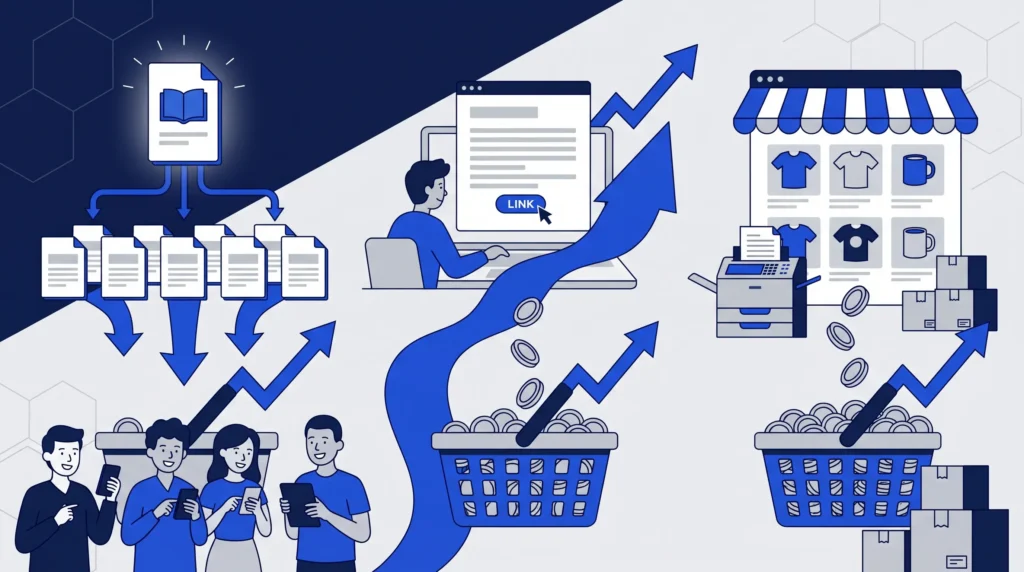
Affiliate marketing pays you a commission when readers buy a product through your link. You build content that helps people, recommend products that solve their problem, and earn on each sale. It’s slow to start, usually months rather than weeks before real income, but once content ranks it can keep earning for years.
Best for: people willing to build for months for income that keeps paying after the work is done.
This is the model my own site runs on, so I’ll be straight with you. It’s not passive at the start. It’s a lot of upfront work for delayed payoff, and plenty of blogs stall because their owners quit before traffic arrives.
Realistic income: enormously variable. Plenty of blogs earn nothing, while established affiliate sites can become a meaningful income stream. Affiliate marketing and product sales now make up a combined 21.2% of US creators’ income, according to The Influencer Marketing Factory’s 2026 Creator Economy Report (survey of 1,000 creators, January 2026).
How to start: pick a niche you can sustain for years. These types of blogs that make money are a good shortlist. Then publish genuinely useful content and join affiliate programs, starting with Amazon Associates and moving to higher-paying software programs.
The new reality: ranking now means getting cited by AI search, not just Google’s blue links. I walk through the full workflow in my guide to starting a blog with AI software and staying AI-search visible.
5. YouTube, Podcasts, and Content Creation
Content creation makes money through ad revenue, sponsorships, affiliate links, and your own products, on YouTube, TikTok, Instagram, and podcasts. The upside is real, but it’s the longest game on this list. Plan on a year of consistent publishing before the income is meaningful.
Best for: people who enjoy making content and can stay consistent long before it pays.
Realistic income: near zero for most of the first year, then a wide range. In The Influencer Marketing Factory’s January 2026 survey of 1,000 US creators, 48.7% earned under $10,000 a year and only 5.7% earned $100,000 or more. The creators who earn well stack ads, sponsorships, affiliates, and their own products.
YouTube: you can join the YouTube Partner Program once you have 1,000 subscribers plus either 4,000 watch hours in the last 12 months or 10 million Shorts views in the last 90 days, according to YouTube’s Partner Program help page (as of November 2026). Once you’re in, YouTube pays you 55% of net ad revenue on long-form videos, 45% of your share of the Shorts ad pool, and 70% of net revenue from memberships and Supers, according to YouTube’s revenue share help page (as of November 2026).
My guide on creating a YouTube channel and making money covers setup, and this breakdown of how much sponsors pay YouTubers covers the bigger payday.
Podcasts: pick a niche, plan an episode calendar, and publish on a schedule your audience can count on. Start with modest podcast equipment for beginners and one of these podcast hosting sites. Podcasts earn through sponsors, affiliates, and listener support.
Social media: don’t spread yourself across every platform. Pick two or three channels where your audience already spends time, and build a following there before you add another.
The AI angle: AI now handles a lot of the grunt work, from editing and enhancement to new images, video, and ideas. 86% of creators actively use creative generative AI, according to Adobe’s Creators’ Toolkit Report (October 2025, 16,000+ creators surveyed). AI won’t make you interesting, but it frees up hours so you can publish more consistently.
6. Online Tutoring and Teaching Courses
Online tutoring pays you to teach live, while a course packages what you know so it sells without you. Tutoring pays quickly and predictably, and courses take more upfront work but scale like a digital product. Many people start with tutoring, learn what students struggle with, then turn that into a course.
Best for: people with knowledge or a skill others want to learn.
Realistic income: US tutors earned a median of $20.84 an hour in May 2025, according to the Bureau of Labor Statistics, and most work part time. That figure covers all tutors, so independent online tutors who set their own rates can land above or below it. A course can earn anywhere from pocket money to a meaningful income stream once it’s built and marketed.
How to start: for tutoring, sign up to a platform and list your subjects. For courses, check that people actually want the topic before you build. A focused curriculum beats an exhaustive one.
Platforms: Outschool and Wyzant for tutoring, and Teachable, Kajabi, or Udemy for courses. All five are research-based picks.
7. Virtual Assistance
A virtual assistant handles the work business owners don’t have time for: email, scheduling, data entry, customer support, and social media. Demand is broad and constant, and you can start with skills you already have. It’s one of the most reliable from-home options, and specialists earn noticeably more than generalists.
Best for: organized people who want steady, flexible, low-barrier income fast.
What to offer: pick two or three services to start. Common ones are inbox and email management, calendar management, customer support, bookkeeping, social media management, lead generation, transcription, and video editing.
Realistic income: rates vary widely by service, client, and experience, so check what VAs with your skills charge on the platform you plan to use. The higher end goes to VAs who specialize, like bookkeeping or social media management, or who are fluent in the tools their clients use.
How to start: decide what you’ll charge and whether you bill by the hour or by the task. Find your first clients on freelance platforms, VA job boards, or through direct outreach to small businesses. Once you have steady clients, you can grow it into a small VA business.
The AI edge: AI-literate VAs command higher rates. A VA who uses AI to draft content, summarize meetings, and automate repetitive tasks delivers more value, and clients pay for that.
8. Make Money With AI
Making money with AI means selling AI-assisted services or products, not reselling raw AI output. You can offer AI-augmented content, design, or automation to businesses, build AI-powered micro-products, or use AI to run any method above faster. The money is in applying AI to a specific client’s problem, with your judgment on quality.
Best for: people who want to ride the defining shift of the decade rather than compete against it.
This method didn’t meaningfully exist when I first wrote this guide. Now it’s the one everyone asks about.
Realistic income: as a service, it tracks freelancing rates and often higher, because AI fluency is still a premium skill. As products, it follows digital-product economics: build once, sell repeatedly. Upwork’s Future Workforce Index 2026 found that earnings for basic AI execution tasks fell 28% year over year, while AI-augmented professional services grew 72% (cited in Upwork’s November 2026 hourly rate guide).
How to start: pick a real problem and a tool that solves it. AI content for businesses, AI-designed assets, and AI-built automations for small companies are all real markets. Sell the outcome, not the tool.
The honest caveat: buyers increasingly recognize and devalue raw, unedited AI output. The money is in a finished result: AI for speed, your judgment for quality. If you write for the web, my roundup on using AI writing software for blogging covers the tools.
Other Side Hustles Worth Knowing
A few smaller side hustles can bring in extra money online, but they rarely become a full income. Domain flipping, audiobook narration, and selling stock photos all work for the right person. Each has a real catch, so treat them as add-ons to one of the eight main methods, not replacements.
Domain flipping: you buy a short, keyword-rich .com and sell it later for more. Plenty of domains never sell, so start with a small budget and stick to one niche. Registrars like Namecheap and GoDaddy are common places to buy.
Audiobook narration and voice-over: if you have a clear voice, platforms like ACX connect narrators with authors. You’ll need a quiet space, a decent microphone, headphones, and recording software. Studio rental gets expensive fast, so a home setup pays off.
Stock photography: sites like Shutterstock, Getty Images, and iStock pay royalties when people license your photos. It’s a slow trickle unless you shoot in volume. Treat it as a bonus for photos you’d take anyway.
How to Make Money Online as a Beginner
The best way to make money online as a beginner is to pick one method that matches your timeline and commit to it for 90 days. If you need cash fast, start with freelancing or virtual assistance, and if you want income that compounds, choose digital products or affiliate marketing. Don’t try all eight at once.
Need cash fast? Freelancing or virtual assistance. Both use skills you have and can pay within days to weeks.
Want long-term, scalable income? Digital products or affiliate marketing. They’re slower to start, but they compound.
Want to build an audience? YouTube, podcasting, and content creation. It’s the longest game, with the widest upside if you stick with it.
Want to ride the AI shift? Layer AI onto whichever method fits you. It makes every other method faster.
My honest advice: ignore the other seven until you’ve given your pick a real shot. The biggest reason people fail isn’t the method. It’s jumping to a new one every two weeks.

Common Make-Money-Online Scams to Avoid
Most make-money-online scams share the same red flags: upfront fees to start earning, guaranteed or “passive” riches, vague systems with no real product, and pressure to act now. Legitimate work pays you, not the other way around. If an opportunity asks for money before you can earn, walk away.
Upfront fees to “start earning.” Starter kits, “activation” fees, and paid training you must buy before your first dollar are the classic version.
Guaranteed or “passive” riches. No legitimate method guarantees income, and nothing is truly passive at the start. “Earn $5,000 a week on autopilot” is a sales pitch, not an opportunity.
Vague “systems” with no real product. If you can’t tell what you’d actually be doing or selling, the only product is the course teaching you to sell the course.
Pressure and urgency. “Only 3 spots left” exists to stop you thinking. Real opportunities are still there tomorrow.
Pay-to-play “jobs.” Legitimate employers don’t charge you to access work. If a job requires a payment, walk away.
Paid surveys aren’t a scam, but they aren’t income. Legit survey sites pay small amounts for your time. Check a site’s reputation before you sign up, and treat it as pocket money at best.
The rule that covers almost all of it: if it sounds too good to be true, it is.
Frequently Asked Questions
What is the most realistic way to make money online?
Freelancing is the most realistic starting point. It uses skills you already have, has the lowest barrier to entry, and pays fastest through platforms like Upwork and Fiverr, often within days of landing a client. Digital products and affiliate marketing scale better long-term, but they take longer to set up and earn.
How can I make money online for free?
Freelancing, affiliate marketing, virtual assistance, and content creation all need little or no upfront investment beyond your time. You can start with skills and tools you already have. Avoid any opportunity that charges an upfront fee before you can earn, because that’s one of the most reliable scam signals there is.
How can beginners make money online?
Beginners make money online fastest with freelance work, virtual assistance, or AI-assisted services, because all three use skills you already have. Pick one, set up a profile on a major platform, and pitch consistently. Most beginners who fail quit early or jump between methods instead of committing to one for 90 days.
How can I make money online from home?
All eight methods in this guide are fully home-based. The fastest from-home options are freelancing and virtual assistance, which can pay within weeks. The most scalable are digital products and affiliate marketing, which take longer to build but can eventually earn with much less ongoing effort than trading your hours.
Is making money with AI legit?
Yes, AI-augmented services like content, design, and automation, plus AI-built digital products, are legitimate and growing fast. The key is selling a real, finished outcome, not raw AI output, which buyers increasingly recognize and devalue. Use AI for speed, then add the judgment and expertise that people actually pay for.
The Bottom Line
There’s no overnight money online, but there is real money online, and more of it is accessible now than ever. The eight methods here are legitimate, and AI has made every one of them faster to start.
Pick the method that matches what you need, commit to it for 90 days, and stay consistent. That one decision separates the people who earn from the people who keep reading articles like this one.
If blogging is your pick, the AI-blogging guide I linked in the affiliate section is the natural next step.
Sources
Upwork: hourly rates by skill and experience (November 2026)
Upwork Help: Freelancer Service Fee (as of November 2026)
Adobe: Creators’ Toolkit Report (October 2025)
YouTube Help: YouTube Partner Program overview and eligibility (as of November 2026)
YouTube Help: revenue share rates (as of November 2026)
US Bureau of Labor Statistics: Occupational Outlook Handbook, Tutors (pay data May 2025)

Recent Posts
Monday.com Review 2026: Is It Still the Best Work OS?
I tested Monday.com against ClickUp, Asana, and Wr...
Updated July 27, 2026
AI Writing Software for Blogging in 2026: Best Tools + How to Stay AI-Search Vis...
The best AI writing software for blogging in 2026 ...
Updated July 20, 2026
HubSpot Review 2026: Is It Worth the Cost?
I tested HubSpot’s free CRM, Starter, and Pr...
Updated July 20, 2026
Teamwork.com Review 2026: Is It the Best PM Tool for Client Work?
I tested Teamwork.com for agency and client projec...
Updated May 29, 2026
Wrike Review 2026: Is It Worth the Cost?
I tested Wrike in real enterprise workflows. Here&...
Updated May 29, 2026
Asana Review 2026: Is It Worth It? (Honest, In-Depth Analysis)
I tested Asana across real team workflows. Here...
Updated May 29, 2026
Newsletter
Don't miss a thing!
Sign up to receive daily news